» Archive for the 'pop culture' Category
Coffee, Chai, West China
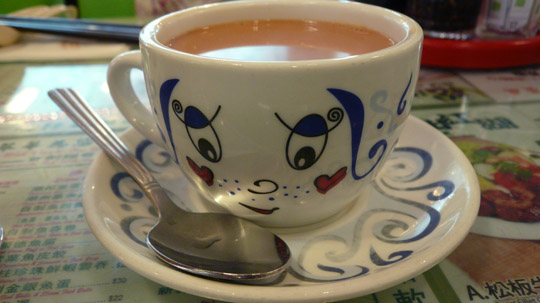
Traveling out West, tea migrated to bowls, and as we approached the Ottoman Empire, the coffee seemed easier to find than a dish of home-style tofu. Here are a few of my favorite images from this daily ritual, Western-China style.
Posted in pop culture | No Comments »
Pabst Blue Ribbon! Select Hipster H20

In honor of Evan Osnos’s “Pardon Me, Would You Have Any Pabst Blue Ribbon?” post in the New Yorker blog, I dug up this carefully preserved, very old photo of PBR “兰带” bottled water.
Perhaps it is the ideal thirst quencher for those hipsters smoldering in the Beijing heat this week…
Posted in pop culture | No Comments »
The US Soldier’s Pocket Guide to China, 1943

I’m celebrating this July 4th national day with the “Soldier’s Pocket Guide to China,” published by the US War Department in 1943. (No bbq’s for me, but as American as one can get at S.I.T., I’m enjoying an omelet slathered in ketchup and Tabasco with a cup of joe, black.)
This guide is deftly written, and delightfully full of insight and sympathy for the Chinese, “our gallant ally.” It comes replete with analects of Confucius––characters included––tips on shopping, girls, racial superiority complexes and more, and how much of it still rings true! (Aside from some predictable cartoonish characterizations of Chinese.)
For all of my American friends in China, remember, “Forget your old notions,” you’re on Chinese turf now, and “You are our Ambassador.” Happy Fourth of July!

“The Chinese are like Americans,” they laugh at the same jokes, and the “Chinese have their great men who were born in cabins” (Chiang Kai-shek).
And tips aplenty, on visiting traditional families: “the quieter you are, the better.”
How to eat in a restaurant: “If you want a good meal in a Chinese restaurant, take your buddies with you.”
Shopping: “If you pay what is asked, the shopkeeper will not respect you for it. If you argue him down too much, he will prefer not to sell it to you at all… But above all, keep good humored throughout. In China it is a sign of bad breeding to grow heated over a purchase.”
Learn about the “squeeze” [this isn’t the same “squeeze” as trying to exit the subway, but commission], and the use of “servants… who are smoothers of your way.” And discover that “Chinese have ways of getting information which has nothing to do with newspapers or organized sources of information.”

“Important things to remember: …By following these suggestions, you will not only avoid difficulties, but you will guarantee your own popularity.”
“…China is the oldest nation in the world and its civilization is in many ways the greatest. As a natural result, the Chinese will not bear any assumption of superiority on the part of a white man because he is white.”
“…Discourage anyone who acts as though the Chinese people are queer. They are not queer.”
“…Try not to lose your temper. You will see plenty of Chinese lose theirs, but they are looked upon as lower class when they do so.”
“…Bear in mind that many refined and well educated Chinese––professors, students, government employees––are today poor and underpaid. … Do not be too quick, therefore, in judging by appearances.”


Images of the introduction below. (more…)
Posted in pop culture | No Comments »
Fear and the “Post 90s”

No, this is not a Chinese equivalent to Twilight. This is Komi, an “Uber-Internet Beauty” 网络超强美女. In case you weren’t aware, big, round eyes, with their giant irises and enormous pupils glinting with anime shine, white skin, pointy almond chin, and pursed rosebud lips are ke’ai, cute. They are cute that has crossed to the other side. Thus, the “Post 90s” generation strikes fear in me. And Komi’s photos caught my eye in the sidebar of some Chinese web portal, a bizarre consequence of the social/technology machine driving self-photography. What were the many stages of production that created this photo, what contributes to the collective failure in recognizing the disturbing nature of this image? (more…)
Posted in pop culture | No Comments »
the Mansudae Art Museum
The North Korean pavilion at the Shanghai World’s Fair was inspiring, but last week I discovered the Mansudae Art Museum in 798 just across from Pace Beijing. The current signage in 798 can’t be missed, and although a stop in to this spacious museum might cause most visitors to smirk at its “kitschy” socialist realist oils and statues with chiseled, idealized proletariat features, there were some artistic treasures within after all. The museum itself seems to be privately funded by one of the DPRK’s most enterprising cultural firms, the Mansudae Art Studio, whose “overseas projects” division is responsible for other monumental statues across Africa, including the controversial Senegalese “African Renaissance.” Look for the Mansudae Museum underneath the book-bearing youth astride a winged horse and crowning an enormous faux-brick pedestal.
Deferring comment on the works themselves, and not knowing enough about the context in which they arrived in China’s most prominent arts district, I’d rather tell you about my joyous discovery of other art within––DPRK stamps! While “Korean jewel painting” and the realist ink and wash landscapes depicting craggy mountains might not appeal to Western tastes, I don’t know who could resist the wonderfully rendered ratus norvegicous found on the pleasingly designed “Rodents” sheet of stamps.
Amidst political themes fawning on the P.R.C. (a plethora of stamps depict Mao Zedong, Zhou Enlai, and more recent visits by the “dear Leader” to China), there was also a fascinating visual interpretation of the “History of the Earth” in which the planet swells like a bubble, and a equally reality-bending 1997 skyline view of Hong Kong, surely a commemoration of her return to Chinese rule. Mushrooms and alpine life sit high on the list of muses for DPRK philatelic society artists, and in the small books for sale inside the museum (13-31RMB), you can find their issue date in both the Western calendar, and in the Juche year (0 = 1912, the year of Kim Il-sung’s birth).


Posted in newsclips, pop culture | 1 Comment »
Shanzhai and ArtBeijing
Round two of the Beijing art fairs opened on April 30th, and the buzz in the art scene confirms, ArtBeijing has surpassed CIGE, providing a better show all around. While the unofficial theme at CIGE was “fear,” ArtBeijing has embraced the spirit of Shanzhai!
These skulls by Fang Shengyi 房圣易 seem to be popping up everywhere lately, a pyramid of at least 50 similar skulls was spotted at the young artists portion of 《Reshaping History 改造历史》 that opened last weekend. Each skull is mounted with 3700 Czech-crystal “diamonds” and took ten workers more than 45 days to complete all these crystal-studded metal alloy skulls.
Here they are again, lower mandibles disjointed and floating in a pile of red and white sand. The title of this installation is “Original Sin” 《原罪》. The artist’s statement reads “a lateral reconsideration towards the frantic pace of economic growth in a socialist motherland… The utilizing, plagiarizing and plundering of intellectual property of advanced civilizations by developing countries equals a bald-faced exploitation of developed culture under the premise of identification…”
Let’s embrace brevity: It’s Shanzhai contemporary art!
This random installation could be a commentary on the art fair, perhaps we could interpret it as the “shanzhai fair within a fair.” (more…)
Posted in art, newsclips, pop culture | No Comments »
Knocking Kongzi


I haven’t seen the biopic on Confucius, Kongzi yet, but I can already tell it’s going to be a doozy. Chow Yun-fat’s omniscient face looming in the heavens on the film poster, and his self-bemused, wizened sage smirk on the film stills is one hint, and recent dogged attempts at drumming up nationalism through culture and the arts is another.
Since I am not a Chinese, and non-Chinese are simply not allowed to mock things Chinese (especially Kongzi) even in good spirit, I figure I’ll do like other bloggers and just rip off Han Han’s brilliant post this morning, entitled, “Watching Kongzi.” Read the Chinese here: 韩寒: 《看孔子》
“…To tell you the truth, I’ve never thought there was a need to turn these classic stories into films. From a film perspective, the moment such films are born, they become the antithesis filmmaking, strangling creativity. But if you say that China’s movies with classical-historical themes show no creativity, that’s not right either, because those scriptwriters are often writing incredibly counter-historical scenes, the situation is tangled. And thus the reason why a vast majority of big-budget Chinese films are borrowing classical themes and historical figures is because their investors have lack a sense of security, they hesitate to invest such a great amount of money on some plotline dreamed up by some dubious director. Occasionally, there comes along a director who has an enormous investment, and the freedom to write their own screenplay––the resulting films are even worse. And such is China’s tragic history of film. According to Chou Yun-fat, people who watch this movie and don’t cry cannot be human, I can believe this is his delusion, and I’m sure that during the in-house screenings, all of the producers cried. They cried thinking about how many elementary school students and governmental organizations they will have to drag to the theaters just to break even.
Let’s forget about all political reasons and look at the film itself, it is a failure of a film. The sermonizing in the film isn’t infective at all, when Kongzi is talking about propriety and benevolence in the film, the guy next to me was having a ten-minute long conversation on his cell phone. …
…
Finally, I want to say that the film Kongzi, no matter if it’s from the point of view of the significance of film, profits, artistic pursuits, film exploration, educational enlightenment, warning or admonishing the public, audio-visual experience, entertainment, or documentation of history, there is no need for this film to exist. This film could be erased completely from film history.”
Despite all this, I’m still happy that Avatar was pulled from the theaters just to make room for this film.
The illusion of global culture has been shattered by recent events with Google.cn, and Hillary’s speech on the “freedom to connect.” China’s official response to “so-called Internet freedom” makes me shudder, are we truly entering a virtual cold war? At the very least, films like this should prove the national agenda is still filtered through culture, remember Founding a Nation? At the least, its one more attempt by China’s film industry to harmonize ticket sales and pleasing the film censors. Yes, I will see Kongzi, because who can’t appreciate the wry irony of watching the former “God of Gambling” play the sagely man of morals Confucius? It’s like a national face lift. Well, I’ll see in on DVD anyways…
Posted in film, in translation, pop culture | 2 Comments »
Urban China: Work in Progress
Perhaps artists like to think of themselves as harbingers of social change, at least think they like to imagine themselves on the vanguard of something. In China, they seem more like backseat drivers. However, the world’s fasting urbanizing nation is heaving forward in myriad expressions, and relentlessly posing challenges to the entire globe with a host of issues that will shape the next decade.Urban China is a magazine that has hovered on the fringes of the art world since it was founded four years, it examines various urban issues in themed monthly issues, featuring intellectuals, artists and social scientists writing on topics such as Chinese creativity, education, migration, or Chinatowns. URBAN CHINA: Work in Progress (Timezone8, 2009), is a new publication co-edited by magazine founder Jiang Jun and Brendan McGetrick that seems to reiterate the supremacy of the urban machine over the artist’s ego, as the book itself grew out of a series of questions that emerged from UC’s participation in Documenta 12 (2007). (more…)
Posted in books, in translation, pop culture | No Comments »
Best of the Worst Spectacles in 2009
What more is there to say? If we should learn from history, and images are the most powerful medium of our age, then the following should need no introduction. For all the love of spectacle we endured, 2009, thank you most of all for introducing me to the perils of the Caonima, watch your back, river crabs are everywhere.
Click on photos for news links.
Posted in newsclips, pop culture | No Comments »
The Christmas Tree’s migration to China
Posted in pop culture, writing | No Comments »
“GUOJIA” National Day patriotism in translation
Sometimes, in the spirit of preserving our mental health (and also following the sound example of many Chinese citizens) we block out the droves of nincompoopery political advertising that inundates Beijing’s population during political festivals. However, China’s 60th anniversary recently passed, and left behind a rich trail of propaganda and harmonious good-tidings that begs to be deciphered by the twisted minds who are so inclined to pay interest to such mass messages from the state.
Thus it follows, a Chinese lesson for all souls who wish to join the“family,” as delivered to you by the creamy voices of Jackie Chan and favored Party chanteuse Liu Yuanyuan. The first video below was the National Day ‘debut’ of the patriotic song, written especially for the 60th anniversary and sung in The Square complemented by hundreds of jubilant dancers.
Please note the harmonious joy of China’s minorities as they dance happily in unison in The Square, this is very likely the favored past time of all the 56 minorities. This joyous display (which later incorporates Hu Jintao, Wen Jiabao, etc.) of course also indicates that even though we may be wearing different satin costumes, or of economic classes, our common ground is here: dancing below the benevolent face of the great leader.
Which brings us to our lesson, where we focus on three words:
国 GUO (kingdom––the simplified character is a composite of characters for “jade”surrounded by a “mouth”)
家 JIA (family, home––literally a “pig” covered with a “roof tile”)
国家 GUOJIA (nation, country, state––the combination of the above two characters)
The Chinese for “China” is 中国 ZHONGGUO (中=middle, inside) All of this word dissection is vital to understanding the first two lines of the song. Pay attention!
Now, due to the ingenious word play in this clever song, the appropriate words will be substituted below: GUO, JIA & GUOJIA.
Note that each time “JIA” is sung, one or both singers makes the sign language signal for “home.” Special note for Cai Guo-Qiang fans, he was the “General Director” of the fireworks display you see at the end of the video.
(China based readers can see it on Sina here)
一玉口中国 Jade inside a mouth––ZHONGGUO
一瓦顶成家 Add a roof tile for a JIA
都说国很大 everyone says the GUO is large
其实一个家 but actually, it’s a JIA
一心装满国 A heart laden with GUO
一手撑起家 a hand props up JIA
家是最小国 JIA is the smallest GUO
国是千万家 a GUO is ten million JIAs
在世界的国 In the World’s GUO
在天地的家 and the JIA of heaven and earth,
有了强的国 having a strong GUO
才有富的家 makes for a wealthy JIA
国的家住在心里 The JIA of the GUO lives in your heart
家的国以和矗立 the GUO of the JIA stands upright with harmony
国是荣誉的毅力 GUO is the perseverance of glory
家是幸福的洋溢 JIA is brimming with prosperity
国的每一寸土地 every inch of the GUO’s soil
家的每一个足迹 every footprint in the JIA
国与家连在一起 GUO and JIA are joined together
创造地球的奇迹 to bring about a planetary marvel
[repeat…]
国是我的国 This GUO is my GUO
家是我的家 This JIA is my JIA
我爱我的国 I love my GUO
我爱我的家 I love my JIA
我爱我国家 I love my GUOJIA!!!
And here, one more time, you have Jackie’s MV version. It features more happy minorities, students reciting their lesson (“GUO, JIA, GUOJIA”), and even some thoughtful calligraphers demonstrating how to write the characters. Later, superstar pianist Lang Lang makes an appearance for a solo played in the Great Hall of the People. (more…)
Posted in in translation, pop culture | 2 Comments »
National Day Parade
Hopefully these pictures can let you experience China’s national day parade as it was enjoyed by hundreds of millions on the morning of October 1st (only the very loyal, and high ranking cadres and military folk actually made it to the bandstand that morning). The painting of Mao looking over the square has been replaced with a smiling, benevolent and satisfied looking comrade, “Old Hu” inspected the troops poking out of the sunroof in the same Hongqi from 1949, and after a very proud and spine-tingling display of “model” soldiers and firepower, the parade began. Perhaps the most elaborate display of socialist pagentry possible today, the parade cost billions of RMB, and (of course) made the DPRK’s birthday celebration look like a mere joke.


Below are some shots of thrilled, smiling crowds and saluting policemen and soldiers. Judging from the blue skies, and the nicely balanced crowds of citizens, we’re pretty sure these were “filler shots” filmed at the rehearsal that happened the previous week.


Aerial shots provided uplifting views of the poignant messages that were delivered via cards flipped by the masses seated in the square they read as following:
“loyalty to the party”/ “socialism is good” / “protect world peace”
The final image is an amazing recreation of the Fu Baoshi painting that hung in the Great Hall of the People. It was commissioned for the hall in 1959 and for decades it provided a most dramatic background for diplomatic missions.
Posted in newsclips, pop culture | 2 Comments »
“Running Teacher Fan” in the 798 Biennale?

We all remember “Running Teacher Fan,” the poor sap who, after abandoning his students in the classroom during the Sichuan earthquake, proceeded to be butchered by Chinese media as the anti-hero. “My sense of self-preservation is too strong,” he was quoted as saying.
Later, Ai Weiwei defended him in his legendary blog, commending his honesty and bravery in admitting his un-noble actions in a time of hero fetishizing, especially in comparison to the Sichuan Ministry of Education, which still won’t face up to the sub-standard construction on schools that caused their collapse.
As if taking Ai’s lead, Zhu Qi, artistic director for the upcoming “798 Biennale” will include Fan Meizhong, the notorious “Running Teacher Fan” in the biennale as an artist. Publicity stunts, or significant attempt to bring art in 798 to a new social dimension? We will have to wait until August 15th to find out.
In a post on the artnow.com.cn site , Zhu Qi writes: “I’m not saying that I agree with Running Teacher Fan’s sense of values, however, the fact that he can honestly voice his opinion is worthy of appreciation.”
“我并不认同范跑跑的价值观,但范跑跑能真实地表达自己的态度和看法是值得欣赏的。”
And he’s not the only “vocal” participant, in an exhibition titled “The Soulful Society VS The Net Spirit” (社会魂vs网络魄)infamous Chongqing “rustynail” dweller(钉子户) Wu Ping, the woman who refused to vacate her home (pictured at left) will also be participating, as well as some disabled, and there’s even a program that trains unemployed workers to be artists, the “Laid off Art Rehabilitation Program.” Hm. How does one qualify?
The whole thing will be going off in the 706 space within the 798 complex, one of the main venues of the Biennale. Dates are August 15 to September 12, 2009. Although a little unclear on the details, or what, exactly, they will be making “art” of, Zhu Qi seems unhindered by the fact that these folks have probably never considered themselves artists before they received a call from his assistant.
Zhu Qi gives two reasons for his decision in his post: the first, Chinese contemporary art should take its lead from reality; the second, a biennale shouldn’t necessarily be a collection of highlights, but also a platform for which to discuss issues.
Posted in art, newsclips, pop culture | No Comments »
Confucius says: appreciate your Pinyin
These collection of selected teachings of Confucius was published in 1954, just four years before Pinyin was officially instated as part of language reform.
Posted in pop culture | No Comments »
798: Upgrading Factory 718 (and its industrial history)
In a CCTV documentary titled “798″, photographer Zhu Yan made the comment: “The factory workers displaced the farmers, the artists displaced the workers, and now…” but the director left out what should have followed, “… the tourists displaced the artists.”
Of course, the myth that 798 is a “cultural production zone” is perpetuated by the mainland media, and almost obsolete industrial patches across China look to the success of 798 as a model of “cultural industry”, a revival area preserving the remnants of an industrial past, but where creativity and commerce can meet to copulate and produce healthy economic offspring.
While that may be a lovely image, the fact is, there is some truth to it. The documentary is a rather sobering look at the quickly vanishing former life of “798″––Factory 718. In the 1950s it was a state of the art center of production, a place of national pride, and a household name that symbolized a better future. Workers were hand-picked for their class background, plucked from the fields and clad in blue to make radio electronics, among other classified military gear; they worked with some of the most “avant-garde” technologies of the day. Military components aside, none of this sounds unfamiliar with the tourist “cultural production zone” we know as 798.
Fifty years later, the changes are incredible. In the five-part documentary we meet laid-off former workers who are now janitorial staff, and the dwindling industrial staff (once more than 10,000, now less than 3000) tells stories of the past: homes of the newly-wed were furnished with a bed, a desk and a cabinet (many had never had their own bed), 8 hour shifts were followed by night school, and infants were picked up from an parking-lot sized nursery, while not-yet school aged children were locked in the one-room apartments while their parents “struggled” to build a strong China. “None of this was looked at as strange,” comments Ms. Gao, who still works in th ecomplex. Her last student, Ding Ding, a young worker and his very dour wife are filmed in their run-down apartment; his 700 RMB monthly salary is barely enough to feed them. I don’t think I can stomach buying a substandard 35 RMB coffee there ever again.
With nary a mention of contemporary art, the series is a historical and grimly patriotic portrait of a very different 798; it was filmed in late 2007/early 2008. The CCTV site has photos and some historical background here. I thought of an article translated last year for the Timezone8 book “Beijing 798 Now” on the former incarnation of Factory 718. It is especially interesting to read how earthquake standards in construction had to be enforced by the East German engineering team. Its a long article, but has some interesting facts. For Chinese, switch languages on upper right.
From 718 to 798
Li Yang
Dashanzi: Beijing’s northeast corner
This district has already experienced two drastic turns of fate. First, fifty years ago, when the 718 was constructed and made a name for itself across China, and now, as the rise of the 798 Art District has brought a “renaissance” to the district, carrying its name overseas. Factory 718 was the celebrated former incarnation, and was one just short of legendary. During China’s “First Five Year plan” era, and with the support of the German Democratic Republic and Chinese national professionals, young people from all corners of the nation converged to build this northern Chinese state-owned factory for radio electronics—it was to be the birthplace of China’s electronics industry. In the beginning, Factory 798 was merely the third stage of the larger Factory 718 compound, and it lay on the outskirts of Beijing. However, this district has already been swallowed by the city’s growth, and become Chaoyang District’s first cultural industries zone, and yet still maintains its status as a center of production for Zhongguancun Electronics.
Today, the symbolic Bauhaus architectural complex still stands, the complex has been entrusted with the industrial history of a city. The transformation from 718 to 798 documents the course of urban industrial restructuring.
The Birth of 718
In April of 1951 the second round of Sino-Soviet summit talks were held in Moscow, China’s request for Soviet aid in the building of 156 major projects was on the table for discussion. However, the Soviets felt that China’s request to help establish the foundations for a new radio electronics industry was too unexpected.
Posted in in translation, pop culture | No Comments »
Jay Chou, pandas, disappointment
The filming of a new “trendy television drama” PANDAMEN was announced in Beijing yesterday, as was the design for the new superhero’s costume. Jay Chou, who directed and starred in his first feature film “Secret” (2006), will challenge himself with this first attempt at a television drama.
Trendy things, television dramas, and Jay Chou are all staples of China’s pop culture landscape--even Pandas are tolerated on a good day. But in the shadow of “Kung Fu Panda” and the diplomatic insanity of “Tuantuan & Yuanyuan”, is this a lack of creativity on Chou’s part, or a pandering to the low-brow tastes of the general audiences?
Will “Pandamen” bring a new home-bred cultural hero to this nation? Who knows. I think many Chinese believe the idea of panda as the only “native” symbol to be exploited is insulting, the panda itself is a lazy, docile animal. But its amazing how leather pants transform anyone, even though that scarf is too trendy a fashion accessory for a futuristic superhero. Perhaps Pandaman’s over the shoulder bookbag, or pea coat will be announced in later episodes.
Still, with no small amount of hope, the entire production will far exceed previous hero-creating attempts (anyone who’s seen 2008’s tv hit the Bruce Lee story will agree).
Read about “Pandamen” on sina
A brief report in English on Crienglish
Posted in pop culture | 1 Comment »
A Riotous Profusion of Museums in Beijing
In honor of new discussions between Taiwan’s National Palace Museum and Beijing’s Palace Museum that might result in a loan of Qing dynasty historical objects to that “renegade” museum across the straight (read NYT article here), check out the cultural resources readily available in Beijing on Sinopop’s new museum guide: Museums in Beijing.
Listed are some of the largest, funniest, overall the most worthy day trips for museum-going fans and families. The old, the new, the kitsch and breathtaking. Beijing’s bars are overrated––check out some of these gems, especially now, when most of these museums are free!
Posted in art, pop culture | No Comments »
Liang Shuo’s “I’m Fucking Beautiful” is f***ing great
“Fucking Beautiful #3″, Liang Shuo’s recent work displayed at the Arario Gallery’s “The Game Is Not Over - Young Chinese Artist Group Exhibition” (游戏没有结束) was a beautiful elegy on all things kitsch and native to China. Its Chinese name, “臭美” translates roughly to something like “self-admiration”, “indulging in vanity”–– the work is a culmination of the artist’s exploration into the world surrounding him, and perhaps a more objective interpretation of “aesthetics” than what we usually see.
Last year, graduates from CAFA’s sculpture department held a rogue exhibition (titled “掉队”) in the art studios by Crab Island (蟹岛). Among the works there, Liang Shuo’s “Shopping at the Temple Fair” (描绘购物) left me giddy, it has proven to be a work in which he honed this vocabulary of bright, flashy and gaudy that appears in “Fucking Beautiful #3″.
Although then still a work in process, “Temple Fair” was clearly a work with roots in rural and folk traditions, as well as an almost encyclopedic examination of the uniqueness of the “made FOR China” market–not only were these objects inexpensive, they were reflective of the dreams, preferences and practicalities of living in rural places. Like the “migrant labor” figurative sculptures that he became well known for from 2000-2004, “Temple Fair” also reflected a consciousness or state of living unique to China. (more…)
Posted in Post 70s / 80s art, art, pop culture | 1 Comment »
Give me New Pants
Beijing art hipsters oddly deny a fascination with the “post-wave” punk band New Pants, its something like New Yorkers who won’t own up to “Gossip Girl” addictions.
Despite the fact that the band’s front men, Peng Lei, is an artist with some repute (and proprietor of a vintage toy boutique), his much more successful band receives nary a mention in Beijing’s art world. This fan was literally sneered at in 798’s “sugar jar records” when she asked if their album was available––instead I purchased a recording that was nowhere near as brilliant as “Dragon Tiger Panacea”, but still labeled itself as ‘punk new wave’. Is the “fine art” myth surrounding 798 purposefully trying to distance itself from the commercial success of Peng Lei and New Pants?
Their new video, 《野人也有爱》 [savages can love too] is a nod to Beijing’s heavy metal heritage. The video is an homage to classic metal bands of the 1990s like Tang Dynasty (or Dou Wei’s Hei Bao), and a jibe at the “primitive” nature of the grubby, long-haired metal hippies that still thrash in the Beijing night.
If you know the references, or have ever experienced an authentic Beijing metal session, you can appreciate the fine art direction: awesome nappy hair (and fine handling of it), cut off jeans, motorcycles and on-site locations featuring the National Art Gallery, Forbidden City and a sweet pile of rubble.
Its clear that Peng Lei’s’ “artistic direction” helped the band take off, and even though there are a few lapses into videos with a mass-market appeal, the lo-fi, self-depreciating absurdity of “savages can love too” convinced me that there were some more good things to come.
In the video below, see a great use of montage in 《爱带我回家》[love take me home], some unforgettable dancing moves by keyboardist Pang Kuan, unresolved Village People references and a superb “circle of slapping”.
More New Pants classics:
Dragon Tiger Panacea, Bye Bye Disco, She is Automatic
Click here for an interview with Peng Lei in Wallpaper magazine
see more works from his 2007 solo exhibition at Arario Beijing
Posted in Post 70s / 80s art, pop culture | 1 Comment »
Breaking Olympic News: Ancient Greeks Had Small Genitalia!
These past two weeks, every communication included something along the lines of “How are the Olympics,” or “hope you’re surviving the Olympics”. The answer: smothering, and just barely.
Now that they have concluded, I feel that ominous burden slowly melting from my psyche, and I realize that I was truly not “coping well” with the games. I was instead lying low, playing dead, unable to watch or even comment on this historic event. Instead, I escaped the steamy red and yellow fervor emanating from the Bird’s Nest stadium by flying off to Yunnan province, a necessary act of “self-protection” (a Chinese pun on “avoiding the Olympics” and “contraception”) but the fervor pursued.
The NYT headlines mocked me in my inbox, conflicting and paradoxical news “angles” from American and Chinese news sources accumulated, champions wept or chomped on their lead-tinged gold medals over the endless highlights montages that were repeating on televisions across China, on every CCTV station, in the airport, in the bus station, waiting for elevators…
From 29, 49, to 51 gold medals––this news tracked me down even at 2000+ meters above sea level. Perhaps it wasn’t altitude sickness at all that left me vomiting in the bathroom. The record-breaking conclusion of the games was a victory for the Chinese spirit, for which I extend my true congratulations.
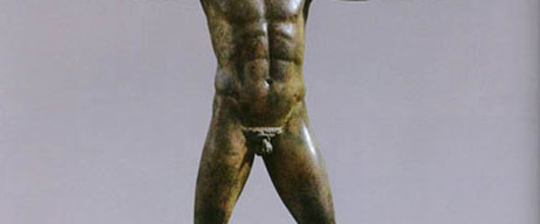
After returning to Beijing, and while browsing one of my favorite stress-relieving Chinglish sites, the Century Online China Art Networks, my “unprotected” eyes were despoiled by an unusual, but seemingly Olympics related headline: “Why does so much ancient Greek art feature males with small genitalia.” An English article posted on August 22, 2008 and signed “CL2000.com.” Here, among Beijing exhibition reviews, a feature on Buddhist sand mandalas, and a piece on the Jewish Museum, was this seemingly out of place reportage on the heft and quality of ancient Greek genitals as evidenced in statuary. (more…)
Posted in pop culture, writing | 1 Comment »
Diary of the Spectacle
by Lee Ambrozy (post from ArtReview.com)
On a day of orgasmic auspiciousness in China, 08/08/08, crowds piled into bars, parks, official ‘fanzones’ outside the Olympic stadium and the old Workers’ stadium, and along Beijing’s ancient north-south axis to watch the opening ceremony collectively on big screens and get the best view of Cai Guo-Qiang’s city-wide fireworks display (they would be the only ones to see the real real fireworks, rather than the computer graphics that appeared on TV). But far removed from these displays of patriotism, and perhaps soured by an already suffocating ‘Olympic spirit’, most of us in Beijing’s artworld chose to scrutinize the ceremonies from our couches.
Still, with cultural giants Zhang Yimou (celebrated director of House of Flying Daggers (2004)) and ace fireworker Cai Guo-Qiang, fresh from his huge exhibition at the New York Guggenheim, behind this production, our expectations were almost as high as the $300 million budget. Responses from the intellectual and creative communities in China were quick and overwhelmingly negative. On his blog, Ai Weiwei, design consultant on the Bird’s Nest and now an outspoken critic of the government in the run up to the games, called it ‘an encyclopedic display of a spiritual consciousness fallen into enemy hands’.
The Chinese know how to exploit manpower, and communism loves its gala performances. Zhang Yimou seemed to be borrowing the techniques of North Korea’s Arirang Mass Games (recently photographed by Andreas Gursky): using people-as-pixels to form staggering, intimidatingly huge collective images in which the individual is subsumed entirely, yet still crucial to the perfection of the big picture.
continue reading here
Posted in pop culture | No Comments »
Two Angles on the Ceremony

See sina.com’s slideshow of opening ceremony photos here, baidu’s ceremony home page here.
Image above from NYT’s slideshow, see it here.
Posted in pop culture | No Comments »